1. Patent Pending: A Probe and Measurement Method for Radiation Characterization and Diagnosis in an Electrostatic Residual Ion Dump
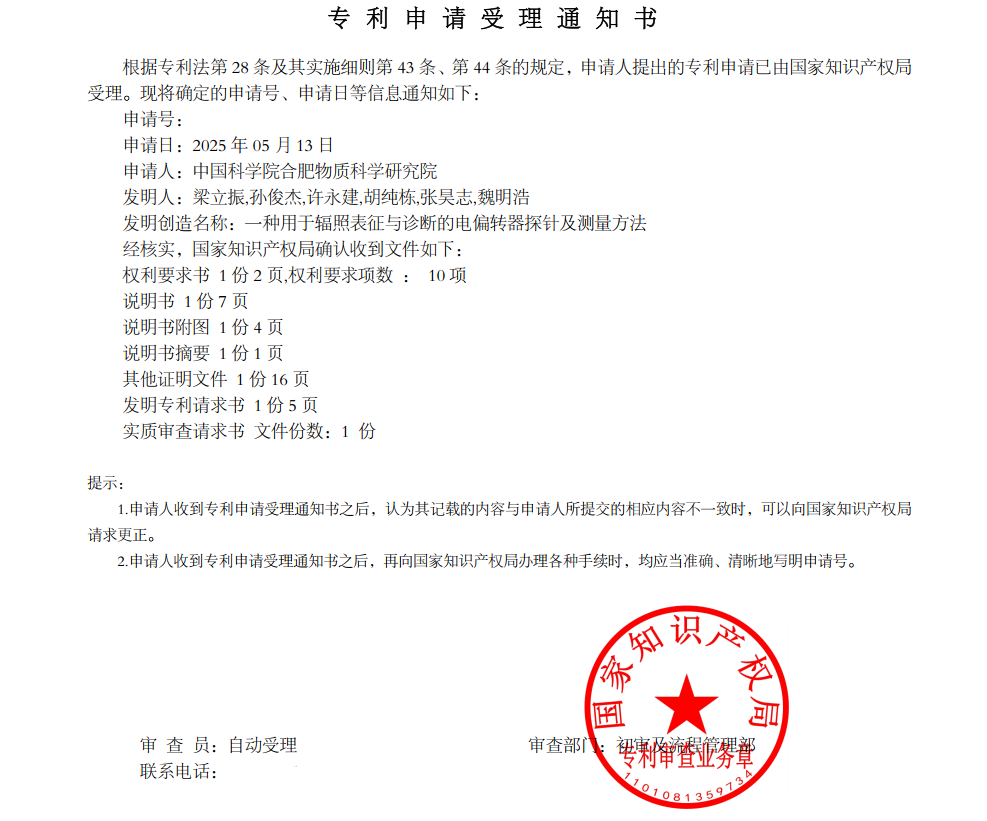
Invention Patent, May 13, 2025
…(Details to be updated.)

Invention Patent, May 13, 2025
…(Details to be updated.)
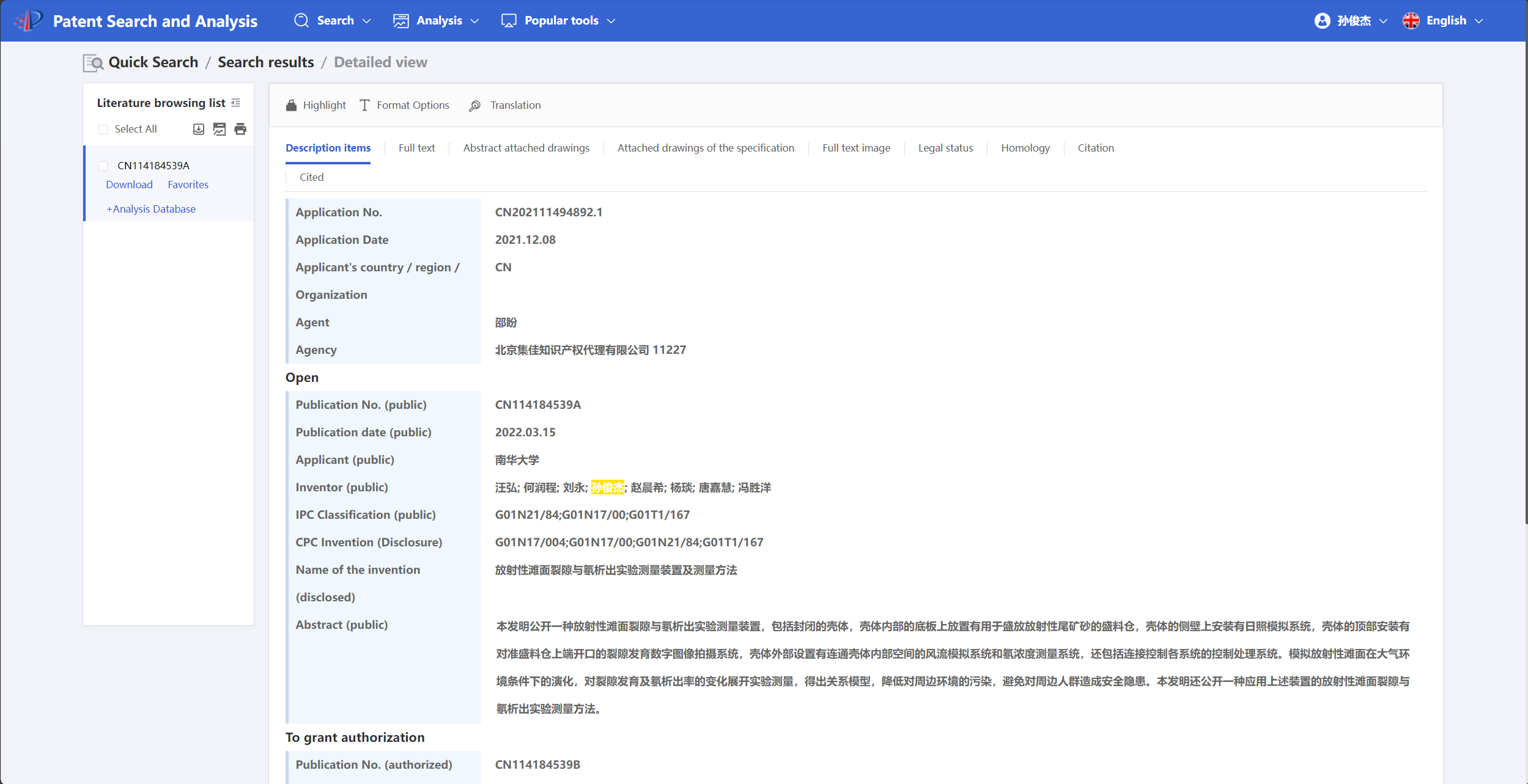
Invention Patent, July 26, 2024
The invention discloses a device and method for experimental measurement of radon exhalation from fissures in radioactive beach surfaces. The device comprises a sealed shell, inside which a feed bin for holding radioactive tailings sand is placed on the bottom plate. A sunlight simulation system is installed on the sidewall of the shell, and a digital imaging system for capturing fissure development is mounted on the top of the shell, aligned with the upper opening of the feed bin. Outside the shell, a wind flow simulation system and a radon concentration measurement system are arranged and connected to the internal space of the shell. The device also includes a control and processing system for managing the operation of all subsystems. This device simulates the evolution of radioactive beach surfaces under atmospheric environmental conditions, enabling experimental measurements of fissure development and changes in radon exhalation rates. The resulting data supports the development of correlation models, which help reduce environmental pollution and prevent safety hazards to surrounding populations. The invention further discloses an experimental method for measuring radon exhalation from fissures in radioactive beach surfaces using the described device.
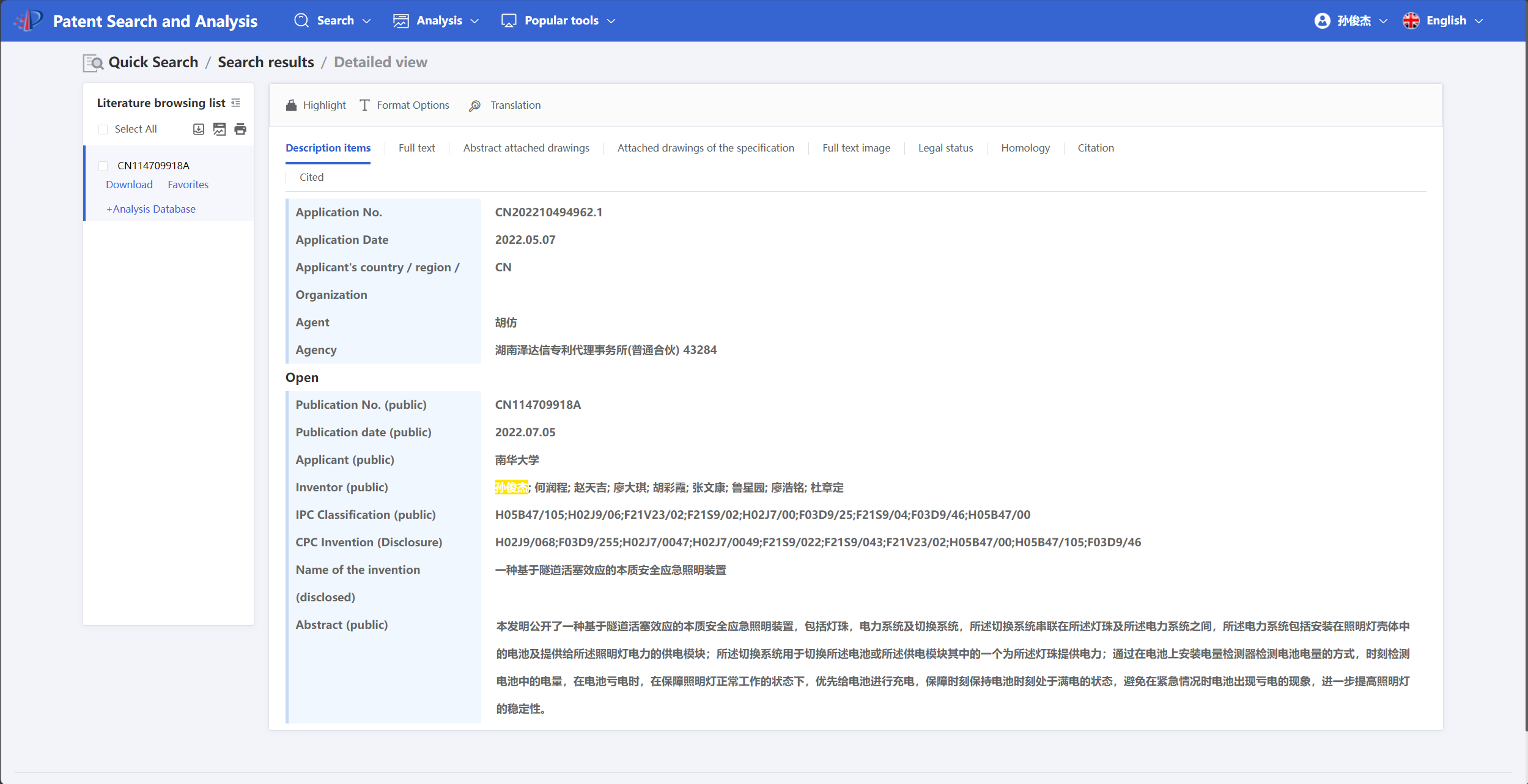
Invention Patent, July 05, 2022
The present invention discloses an intrinsically safe emergency lighting device based on the tunnel piston effect, comprising a lamp bead, a power system, and a switching system, the switching system being connected in series between the lamp bead and the power system. The power system comprises a battery mounted within the shell of the lighting lamp and a power supply module that provides power to the lamp; the switching system is configured to switch between the battery and the power supply module to supply power to the lamp bead. A power detector is installed on the battery to monitor its power level in real time. When the battery is in a low-power state, it is given charging priority under the premise of ensuring the normal operation of the lighting lamp. This ensures that the battery remains fully charged at all times, avoids lack of electricity during emergencies, and further enhances the stability of the lighting lamp.
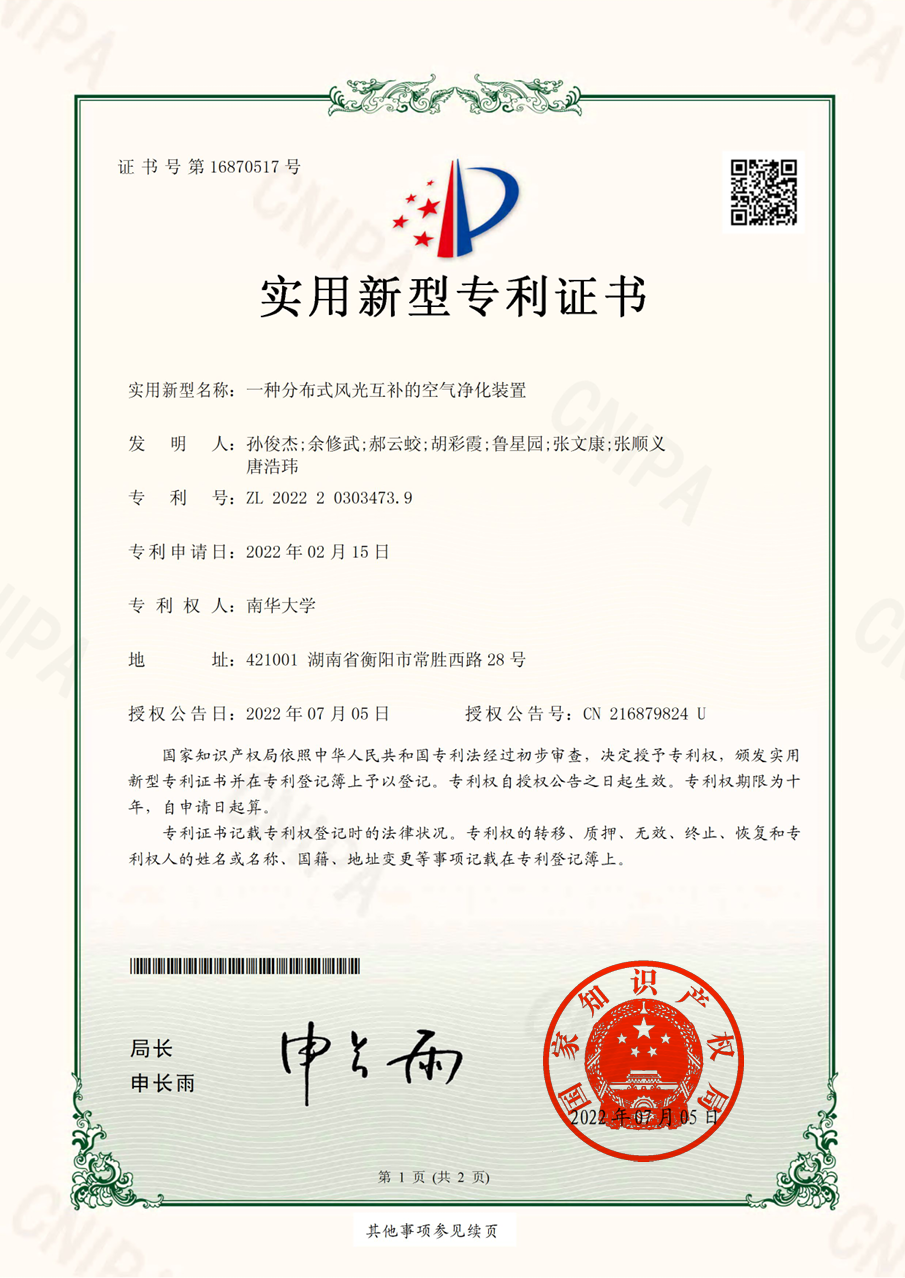
Utility Model Patent, February 15, 2022
The utility model discloses a distributed air purification device with wind-solar hybrid power supply, comprising a base in the shape of a rectangular box with openings at both ends. A dust collection frame is fixedly connected to the lower part of the base, while a wind-solar power generation unit is mounted on the upper part. Inside the base, multiple discharge adsorption plates are arranged side by side for discharging and adsorbing particulate matter. Above these plates and within the dust collection frame, a cleaning frame is provided to remove accumulated particles. An exhaust fan is installed on one side of the discharge adsorption plates within the base, and filter plates are positioned at both the air inlet and outlet of the base. A drawer is also slidably connected inside the dust collection frame for collecting dust. This device utilizes solar energy and wind pressure generated by passing vehicles to power its operation, enabling efficient purification of roadside air in an energy-saving and environmentally friendly manner.
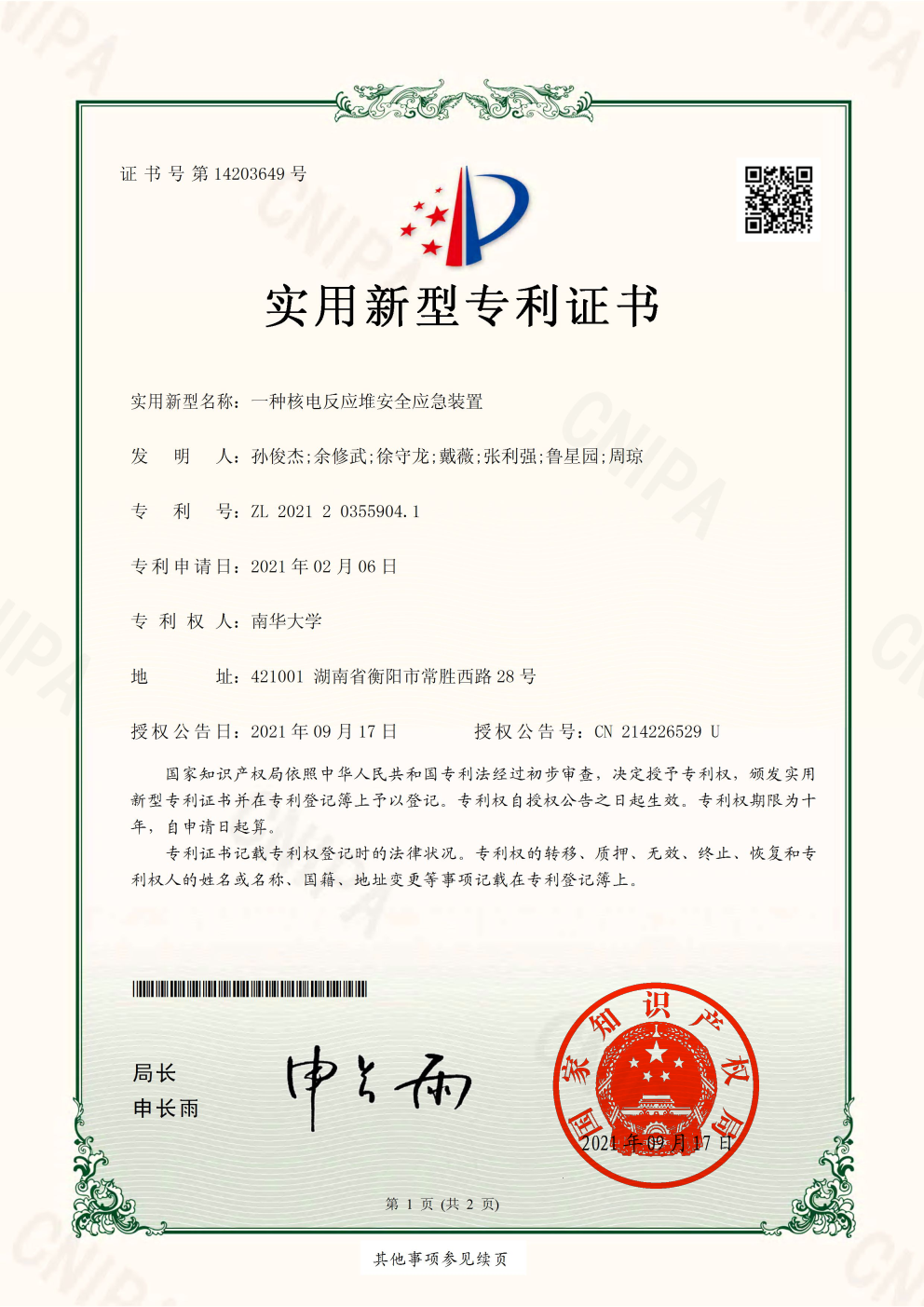
Utility Model Patent, September 17, 2021
The utility model discloses a safety emergency device for nuclear power reactors. The device comprises a steam generator connected to a cooling pipe installed inside a water-cooled box via a pressure relief pipe. A remotely adjustable safety valve is mounted on the pressure relief pipe. The cooling pipe is further connected to an external discharge tank through a discharge pipe. The water-cooled box is connected to an external air-cooled tower via a water inlet pipe and an exhaust pipe, and is equipped with a drain pipe for water discharge.This device can prevent the rupture of heat transfer tubes in the steam generator, thereby avoiding nuclear contamination. Additionally, it can regulate the internal pressure of the safety shell when it rises, enabling the safety valve to open smoothly for pressure relief.